
Rectal prolapse is a condition that can feel uncomfortable, embarrassing, and worrying—but the good news is that it is treatable, especially when detected early. Many people in Bangalore ignore early symptoms because they assume it’s “just piles” or a temporary bowel issue. However, rectal prolapse is different and requires proper medical evaluation.
At Chirag Global Hospitals, we regularly help patients across Bangalore identify the root cause of their symptoms and guide them toward the safest, most effective treatment plan. As the Best Colo – Rectal Hospital of India, we believe in patient-first care that is advanced, transparent, and focused on long-term relief.
Need clarity about your symptoms? Don’t wait. Book a consultation at Chirag Global Hospitals in Bangalore and speak to a colorectal specialist for a proper diagnosis and early treatment options.
What Is Rectal Prolapse?
If you’re searching online for what is rectal prolapse, here’s a simple explanation:
Rectal prolapse happens when the rectum (the last part of the large intestine) slips down and protrudes through the anus. It may appear as a reddish or pinkish bulge, especially while passing stool.
Rectal prolapse can occur gradually or suddenly, and it may worsen over time if left untreated.
Types of Rectal Prolapse
Rectal prolapse is generally classified into three types:
- Partial prolapse (mucosal prolapse): Only the lining of the rectum protrudes
- Complete prolapse: The full thickness of the rectum comes out
- Internal prolapse (intussusception): The rectum folds into itself but doesn’t come outside
Understanding the type of prolapse helps doctors decide the most suitable treatment.
Why Rectal Prolapse Should Not Be Ignored
In a fast-paced city like Bangalore, many patients delay treatment due to busy schedules, work pressure, or discomfort discussing bowel-related symptoms. But rectal prolapse is not something to “adjust with” or treat only with home remedies.
If untreated, rectal prolapse can lead to:
- Increased discomfort and swelling
- Bleeding and irritation
- Worsening constipation or leakage
- Difficulty controlling bowel movements
- Higher chances of recurrence and complications
Early diagnosis makes treatment easier, safer, and often less invasive.
Rectal Prolapse Symptoms: Early Warning Signs to Watch For
Rectal prolapse symptoms may start mildly and become more noticeable over time. Many people confuse it with piles (hemorrhoids), but the symptoms and appearance can differ.
Common Rectal Prolapse Symptoms
You may notice:
- A bulge coming out of the anus, especially during bowel movement
- Feeling of “something coming down” while straining
- Anal discomfort or heaviness
- Mucus discharge or wetness in undergarments
- Bleeding during or after passing stool
- Incomplete bowel emptying sensation
- Difficulty controlling gas or stool (fecal incontinence)
- Frequent urge to pass stools even after using the toilet
Early Signs Many People Ignore
Some early symptoms are subtle, such as:
- Needing to strain more than usual
- A feeling of looseness in the rectal area
- Mild leakage or staining
- Constipation that keeps coming back
- A small protrusion that goes back in on its own
If you live in Bangalore and notice these signs repeatedly, it’s best to consult a specialist rather than self-diagnosing.
What Causes Rectal Prolapse?
Rectal prolapse usually happens due to weakness in the pelvic floor muscles and the supporting tissues around the rectum. It may occur due to multiple factors rather than a single cause.
Common Causes of Rectal Prolapse
Some of the most common triggers include:
- Chronic constipation and straining
- Long-term diarrhea
- Weak pelvic floor muscles
- Age-related muscle weakening
- Pregnancy and childbirth (in some cases)
- Previous pelvic surgeries
- Nerve damage affecting bowel control
- Chronic coughing (increased abdominal pressure)
In Bangalore, we often see rectal prolapse linked to lifestyle-related bowel habits such as low-fiber diets, dehydration, irregular meal timing, and long sitting hours.
Who Is at Higher Risk of Rectal Prolapse?
Rectal prolapse can affect people of different age groups, but some individuals are more prone.
Higher-Risk Groups Include:
- Older adults (due to muscle weakening)
- Women after multiple childbirths
- People with long-term constipation issues
- Individuals with pelvic floor dysfunction
- Patients with neurological conditions affecting bowel movement
- Those with a history of rectal or pelvic surgery
Even younger adults in Bangalore can develop prolapse due to chronic constipation, gym-related straining, or bowel disorders.
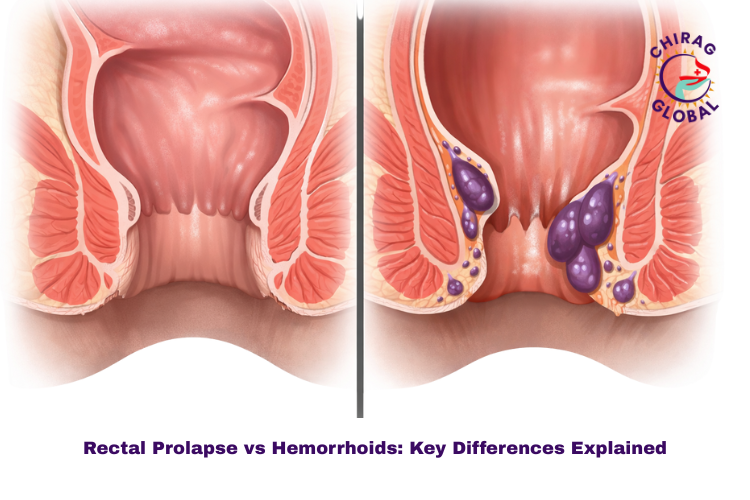
Rectal Prolapse vs Piles: How to Tell the Difference?
Many patients visiting colorectal clinics in Bangalore ask the same question:
“Is it piles or rectal prolapse?”
Here’s a simple comparison:
Piles (Hemorrhoids)
- Swollen veins around the anus
- May cause pain, itching, bleeding
- Bulge may be small and localized
- Often improves with lifestyle changes or minor procedures
Rectal Prolapse
- Rectum itself comes out through the anus
- Bulge appears larger and circular
- Often associated with mucus discharge and leakage
- Usually worsens without proper treatment
If you’re unsure, a specialist evaluation is the safest way to confirm.
How Is Rectal Prolapse Diagnosed?
At Chirag Global Hospitals, diagnosis is done with sensitivity and privacy. The goal is to confirm prolapse type and rule out other conditions.
Common Diagnostic Steps
Your doctor may recommend:
- Clinical examination
- Digital rectal examination
- Proctoscopy / sigmoidoscopy
- Colonoscopy (if needed for deeper evaluation)
- Defecography (in select cases)
- Pelvic floor assessment
The process is typically quick and patient-friendly.
Rectal Prolapse Treatment Options in Bangalore
Treatment depends on severity, symptoms, age, and overall health.
1) Lifestyle and Non-Surgical Management (Early Cases)
For mild prolapse, doctors may suggest:
- High-fiber diet
- Drinking enough water
- Stool softeners (if required)
- Avoiding straining during bowel movements
- Pelvic floor exercises
These methods may help reduce symptoms but may not permanently correct complete prolapse.
2) Surgical Treatment (Definitive Solution)
For complete or recurring prolapse, surgery is often the best long-term option.
Common surgical approaches include:
- Rectopexy (abdominal approach)
- Perineal procedures (through the anus)
- Minimally invasive laparoscopic surgery (where suitable)
A colorectal specialist will choose the safest technique based on your condition and comfort.
Chirag Global Hospitals is one of bangalore’s leading colorectal hospitals located in bangalore, known for advanced colorectal evaluation, minimally invasive approaches, and structured follow-up care.
What to Expect During Treatment and Recovery
Patients often worry about pain, hospital stay, and returning to work—especially in Bangalore where work schedules can be demanding.
Recovery Experience (General)
Most patients experience:
- Reduced bulging and discomfort after treatment
- Gradual improvement in bowel control
- Guidance on diet and bowel habits
- Follow-up visits to ensure healing
Your doctor will provide a personalized plan so you can recover comfortably.
Why Choose Chirag Global Hospitals in Bangalore for Rectal Prolapse Care?
Choosing the right hospital matters—because rectal prolapse affects quality of life, confidence, and daily comfort.
At Chirag Global Hospitals, patients across Bangalore trust us for:
- Dedicated colorectal specialists
- Accurate diagnosis and clear treatment planning
- Patient-friendly consultation approach
- Focus on long-term prevention and recurrence reduction
- Safe surgical expertise and follow-up guidance
If you’re looking for expert care backed by trust, experience, and advanced techniques, our team is ready to help.
Conclusion: Get Expert Rectal Prolapse Treatment in Bangalore
Rectal prolapse can feel stressful, but you don’t have to live with discomfort, leakage, or fear of symptoms worsening. The earlier you seek help, the easier it is to treat and recover confidently.
Visit Chirag Global Hospitals in Bangalore—trusted as the Best Colo – Rectal Hospital of India—and get a complete evaluation from experienced colorectal specialists.
Call now or book your consultation today to explore the safest rectal prolapse treatment options and regain your comfort and confidence.
FAQs
1) Is rectal prolapse painful?
It may not always be painful in the beginning, but it can cause discomfort, heaviness, irritation, and pain as it worsens.
2) Can rectal prolapse go away on its own?
Mild cases may temporarily reduce, but complete rectal prolapse usually does not permanently resolve without medical treatment.
3) How do I know if I have rectal prolapse or piles?
Rectal prolapse usually appears as a larger circular bulge and may come out during bowel movements. A specialist examination at Chirag Global Hospitals in Bangalore can confirm the diagnosis.
4) Is surgery the only option for rectal prolapse?
Not always. Early or partial prolapse may improve with lifestyle changes, but recurring or complete prolapse often needs surgical correction for long-term relief.
5) How many follow-ups are needed after treatment?
Follow-ups depend on the severity and treatment type. Most patients need at least 1–2 scheduled follow-ups to monitor healing and bowel function.