

Constipation can make bowel movements difficult, uncomfortable, and sometimes painful. One of the simplest dietary strategies that may help is increasing fibre foods for constipation. Fibre can add bulk to stool, help retain water in the bowel, and support more regular bowel movements.
However, adding large amounts of fibre suddenly is not always helpful. Some people may experience bloating or gas if their fibre intake increases too quickly. Fibre also works best when combined with adequate fluid intake and regular physical activity.
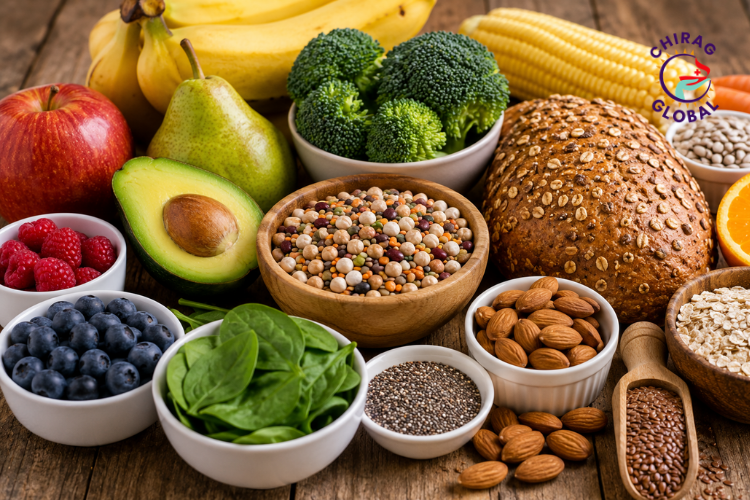
From fruits and vegetables to whole grains, legumes, nuts, and seeds, there are many ways to include more fibre in everyday meals.
At Chirag Global Hospitals, Bangalore, persistent or recurrent constipation can be evaluated to identify possible underlying causes and determine whether dietary changes alone are appropriate.
Book a Consultation | Call 08065903127
How Does Fibre Help With Constipation?
Dietary fibre is a type of carbohydrate that the body does not fully digest.
Different types of fibre affect digestion in different ways.
Soluble Fibre
Soluble fibre absorbs water and forms a softer, gel-like material in the digestive tract.
It is found in foods such as:
- Oats
- Barley
- Apples
- Citrus fruits
- Beans
- Certain seeds
Insoluble Fibre
Insoluble fibre adds bulk to stool and helps support movement through the digestive tract.
Sources include:
- Whole grains
- Vegetable skins
- Many vegetables
- Wheat bran
- Nuts and seeds
Many foods contain a mixture of both types.
Best Fibre Foods for Constipation
1. Oats
Oats are a convenient source of dietary fibre and can be used as:
- Breakfast porridge
- Overnight oats
- Oat-based snacks
- A topping for yoghurt
They contain soluble fibre, including beta-glucan.
2. Fruits
Fruits can provide fibre along with water and other nutrients.
Good options include:
- Apples
- Pears
- Oranges
- Guava
- Kiwi
- Berries
- Papaya
Whenever appropriate, eating fruit whole rather than drinking fruit juice provides more fibre.
3. Prunes
Prunes, or dried plums, are traditionally used to help with constipation.
They provide fibre and also contain naturally occurring compounds that can support bowel movements.
Because dried fruit is concentrated, portion size matters.
4. Guava
Guava can be a useful fibre-rich fruit.
Eating the fruit whole provides more fibre than consuming it as juice.
5. Pears
Pears contain dietary fibre and water.
Keeping the skin on, when appropriate and well washed, can increase the fibre content.
6. Apples
Apples provide fibre, particularly when eaten with the skin.
They can be an easy snack between meals.
7. Kiwi
Kiwi contains fibre and has been studied for its potential role in supporting bowel regularity.
It can be eaten on its own or added to breakfast or yoghurt.
Fibre-Rich Vegetables for Constipation
Vegetables can make it easier to increase fibre without relying on supplements.
Useful options include:
- Carrots
- Green peas
- Broccoli
- Beans
- Sweet potatoes
- Spinach
- Okra
- Pumpkin
- Cauliflower
Try adding vegetables to lunch and dinner rather than trying to consume a large amount in a single meal.
8. Sweet Potatoes
Sweet potatoes contain fibre and can be used in several meals.
They can be:
- Boiled
- Baked
- Steamed
- Added to soups
- Used as a side dish
Eating the edible skin can provide additional fibre when properly cleaned and tolerated.
9. Beans and Lentils
Legumes are among the most useful plant sources of dietary fibre.
Examples include:
- Chickpeas
- Kidney beans
- Green gram
- Black gram
- Lentils
- Black beans
They can be added to curries, soups, salads, or traditional meals.
If legumes cause excessive gas, increase the quantity gradually.
10. Whole Grains
Replacing some refined grains with whole grains can increase daily fibre intake.
Options include:
- Brown rice
- Whole-wheat roti
- Oats
- Barley
- Millets
- Whole-grain bread
The best choice depends on dietary preferences and tolerance.
11. Chia Seeds
Chia seeds contain substantial dietary fibre and absorb water.
They can be added to:
- Yoghurt
- Oatmeal
- Smoothies
- Porridge
When increasing fibre through seeds, adequate fluid intake is important.
12. Flaxseeds
Ground flaxseed can provide fibre and can be added to meals such as:
- Oatmeal
- Curd or yoghurt
- Smoothies
- Breakfast cereals
Ground flaxseed is generally easier to incorporate into meals than whole seeds.
13. Nuts
Nuts can contribute fibre while also providing healthy fats and other nutrients.
Examples include:
- Almonds
- Pistachios
- Walnuts
- Peanuts
A small serving can be added to breakfast or used as a snack.
Fibre Foods for Constipation: A Simple Indian Meal Plan
A fibre-rich diet does not need to be complicated.
Breakfast
Choose one:
- Oats with fruit and seeds
- Vegetable upma
- Whole-wheat dosa with vegetables
- Whole-grain toast with fruit
Mid-Morning
- Guava
- Apple
- Pear
- Orange
- Kiwi
Lunch
Consider:
- Brown rice or whole-grain roti
- Dal
- Two vegetable dishes
- Salad
- Curd if tolerated
Evening Snack
- Fruit
- A small portion of nuts
- Roasted chickpeas
Dinner
A balanced meal could include:
- Whole-grain roti or another whole grain
- Dal or beans
- Cooked vegetables
- Salad
The exact meal plan should be adapted to individual dietary needs.
Key Takeaway
Choosing the right fibre foods for constipation can support softer, more regular bowel movements. Fruits, vegetables, legumes, oats, whole grains, nuts, seeds, and certain dried fruits can all contribute to daily fibre intake.
The key is to increase fibre gradually and maintain appropriate fluid intake. Regular physical activity, responding to the urge to pass stool, avoiding excessive straining, and maintaining healthy toilet habits can further support bowel health.
However, persistent constipation should not be treated with diet alone. If symptoms continue or occur alongside significant pain, bleeding, vomiting, abdominal swelling, weight loss, or inability to pass stool or gas, medical evaluation is important.
At Chirag Global Hospitals, Bangalore, specialist assessment can help identify the cause of ongoing constipation and determine the most appropriate approach to treatment.
Visit Chirag Global Hospitals Today!
Frequently Asked Questions
Which fibre foods are best for constipation?
Fruits, vegetables, oats, whole grains, beans, lentils, chia seeds, flaxseeds, and nuts can all contribute to a fibre-rich diet.
Is fruit good for constipation?
Yes. Whole fruits such as pears, apples, guava, kiwi, oranges, and papaya provide fibre and can be included as part of a balanced diet.
Are prunes helpful for constipation?
Prunes can help some people because they provide fibre and naturally occurring compounds that can support bowel movements.
Can I eat fibre without drinking more water?
Increasing fibre without adequate fluid may cause bloating or make stools harder in some people. Fibre should generally be increased gradually alongside appropriate fluid intake.
How much fibre should I eat for constipation?
Many adults benefit from approximately 25–30 grams of fibre daily, although individual requirements vary.
Can too much fibre cause constipation?
A sudden large increase in fibre, particularly without enough fluid, can cause bloating and discomfort and may not improve constipation. Gradual increases are generally better.
Is rice good for constipation?
Whole-grain rice such as brown rice generally provides more fibre than refined white rice. The overall diet matters more than one individual food.
When is fibre not enough for constipation?
If constipation is severe, persistent, recurrent, or associated with pain, vomiting, bleeding, abdominal swelling, or inability to pass stool or gas, medical assessment is more appropriate than relying on fibre alone.