
Constipation and piles are two common yet distressing conditions that affect millions of people in Bangalore. Constipation and piles are closely linked, and prolonged straining during bowel movements is often a leading cause. If you are experiencing discomfort, bleeding, or itching, consulting experts can make a significant difference. Chirag Global Hospitals, the best Colo-Rectal Hospital of India and one of Bangalore’s leading colorectal hospitals, specializes in diagnosing and treating piles with modern, patient-friendly approaches.
If you are struggling with piles, book a consultation with our specialists in Bangalore today to receive personalized care and relief.
Understanding Constipation and Its Impact
What is Constipation?
Constipation occurs when bowel movements become infrequent, hard, or difficult to pass. Common causes include:
- Low fiber diet
- Dehydration
- Sedentary lifestyle
- Certain medications
- Ignoring the urge to pass stools
How Constipation Leads to Piles
Persistent constipation increases pressure on the veins in the rectum and anus. Over time, this pressure can cause swollen veins, also known as hemorrhoids or piles.
Key factors linking constipation to piles include:
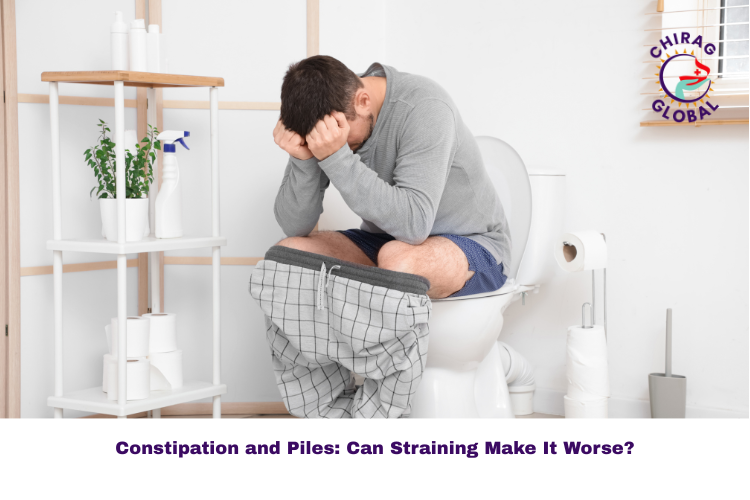
- Frequent straining during stools
- Hard, dry stools causing tears in the anal lining
- Prolonged sitting on the toilet
Signs You Shouldn’t Ignore
If constipation is accompanied by piles, you may notice:
- Painful bowel movements
- Rectal bleeding
- Itching or irritation
- A feeling of incomplete evacuation
Early intervention at a specialized hospital like Chirag Global Hospitals in Bangalore can prevent complications and improve quality of life.
Don’t wait—schedule an appointment with our colorectal specialists in Bangalore to manage constipation and prevent piles.
Straining During Stools and Its Role in Piles
Why Straining Happens
Straining occurs when the body has difficulty passing stools. This is often due to:
- Chronic constipation
- Weak pelvic floor muscles
- Inadequate water intake
How Straining Contributes to Piles
Straining increases pressure on rectal veins, leading to:
- Internal hemorrhoids (inside the rectum)
- External hemorrhoids (around the anus)
- Painful swelling and inflammation
Even occasional straining can worsen existing piles. Understanding proper bowel habits is crucial to prevention.
Preventing Piles in Bangalore Residents
Lifestyle adjustments can significantly reduce the risk of piles:
Diet and Hydration
- Eat fiber-rich foods: vegetables, fruits, whole grains
- Drink at least 2–3 liters of water daily
- Avoid excessive caffeine and processed foods
Healthy Bowel Habits
- Respond promptly to bowel urges
- Avoid prolonged sitting on the toilet
- Consider using a footstool to support proper posture
Regular Exercise
- Walking, yoga, and pelvic floor exercises help improve bowel movements
- Strengthening abdominal muscles reduces strain
Medical Interventions
For persistent cases, medical treatments at Chirag Global Hospitals, Bangalore include:
- Rubber band ligation
- Infrared coagulation
- Minimally invasive surgical options
Visit Chirag Global Hospitals in Bangalore to explore advanced treatments for piles and relieve your discomfort effectively.
When to See a Specialist
You should consult a specialist immediately if you experience:
- Persistent bleeding
- Severe pain during bowel movements
- Piles that protrude outside the anus
- Signs of infection such as swelling or pus
Our colorectal experts in Bangalore provide a thorough evaluation and personalized treatment plans tailored to your condition.
Conclusion
Constipation and piles are closely related, and straining during stools is a major contributing factor. Residents of Bangalore should be proactive in managing bowel habits and seeking expert care. Chirag Global Hospitals, offers state-of-the-art treatments, personalized consultations, and compassionate care for all patients.
Take the first step toward relief—Visit Chirag Global Hospitals Bangalore today and regain your comfort and health.
FAQs
1. Can constipation really cause piles?
Yes. Chronic constipation increases pressure on rectal veins, which can lead to swollen hemorrhoids or piles.
2. Why choose Chirag Global Hospitals in Bangalore for piles treatment?
We are the best Colo-Rectal Hospital of India, offering advanced diagnostics, minimally invasive procedures, and a patient-friendly approach.
3. Is treatment for piles painful?
Modern treatments are designed to be minimally invasive, ensuring comfort and quick recovery. Our specialists prioritize patient comfort.
4. How long does it take to recover from piles treatment?
Recovery depends on the treatment type. Non-surgical methods may take days, while minimally invasive surgeries usually require 1–2 weeks.
5. Do I need follow-ups after piles treatment?
Yes. Follow-ups ensure proper healing, monitor recurrence, and provide guidance on lifestyle modifications.