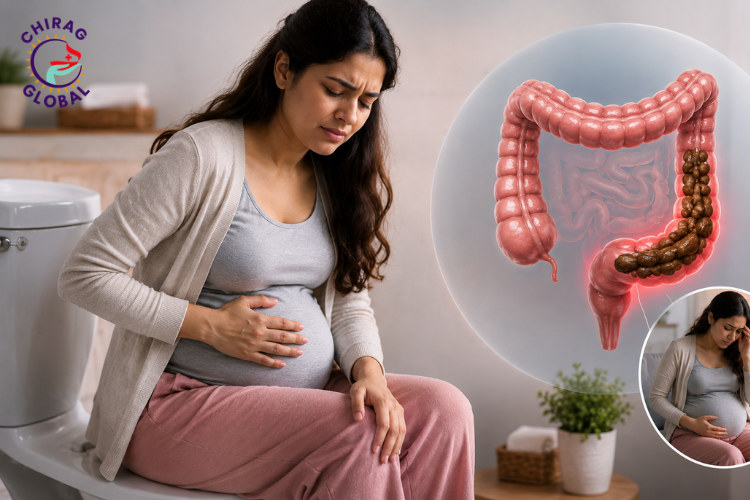

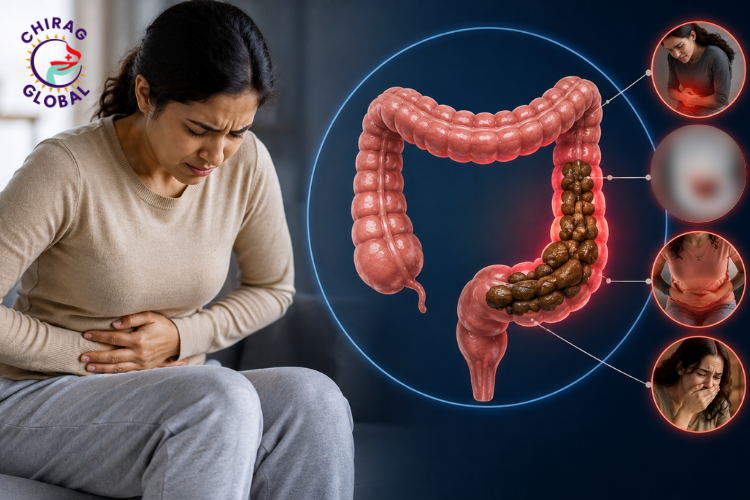
Constipation is common and often improves with simple changes such as increasing fibre, drinking adequate fluids, staying active, and maintaining regular toilet habits. But constipation is not always harmless.
Certain constipation danger signs can indicate that something more serious is happening, particularly when symptoms are severe, sudden, persistent, or different from a person’s usual bowel pattern.
Severe abdominal pain, repeated vomiting, significant abdominal swelling, blood in the stool, unexplained weight loss, or an inability to pass stool or gas should not be managed as ordinary constipation without medical assessment.
Recognising these warning signs early can help identify conditions such as bowel obstruction, fecal impaction, gastrointestinal bleeding, or other digestive disorders that may require prompt treatment.
At Chirag Global Hospitals, Bangalore, persistent or concerning constipation can be evaluated to identify the underlying cause and determine appropriate treatment.
Book a Consultation | Call 08065903127
What Is Constipation?
Constipation generally involves difficulty passing stool, hard or dry stools, excessive straining, or a change from your normal bowel pattern.
It can occur because of:
- Low fibre intake
- Inadequate fluid intake
- Reduced physical activity
- Changes in routine
- Ignoring the urge to pass stool
- Certain medications
- Pregnancy
- Some medical conditions
Occasional constipation is usually not dangerous.
The concern arises when constipation becomes severe, persistent, recurrent, or is accompanied by other symptoms.
10 Constipation Danger Signs You Should Not Ignore
1. Severe or Worsening Abdominal Pain
Mild abdominal discomfort can occur with constipation.
However, severe, persistent, or worsening abdominal pain is a warning sign.
It may indicate significant stool retention, bowel obstruction, inflammation, or another abdominal condition.
Do not assume severe abdominal pain is simply caused by constipation.
2. Persistent Vomiting
Constipation accompanied by repeated vomiting requires medical assessment.
When stool or intestinal contents cannot move normally through the bowel, pressure can build up and cause nausea and vomiting.
Persistent vomiting can also lead to dehydration and electrolyte disturbances.
3. Significant Abdominal Swelling
A noticeably swollen or distended abdomen can be concerning when it occurs alongside severe constipation.
If the abdomen becomes increasingly distended, particularly with pain, vomiting, or inability to pass gas, urgent evaluation is important.
4. Inability to Pass Stool or Gas
Being unable to pass both stool and gas can be an important warning sign.
In some situations, this may indicate a bowel obstruction or severe stool blockage.
This is different from simply having fewer bowel movements than usual.
If constipation is accompanied by increasing abdominal pain or swelling and you cannot pass gas, seek prompt medical attention.
5. Blood in the Stool
A small amount of bright-red blood can sometimes occur when hard stool causes an anal fissure or irritates hemorrhoids.
However, recurrent, heavy, unexplained, or dark-coloured bleeding should not be attributed to constipation without evaluation.
Blood may originate from different parts of the digestive tract, and the cause needs to be determined.
6. Unexplained Weight Loss
Unintentional weight loss alongside persistent constipation or a significant change in bowel habits deserves medical attention.
Weight loss can occur for many reasons, but when it is unexplained, doctors may need to investigate for an underlying digestive or systemic condition.
7. Persistent Change in Bowel Habits
A sudden or lasting change in your usual bowel pattern should be evaluated, especially when it continues for several weeks.
Examples include:
- New persistent constipation
- Alternating constipation and diarrhoea
- Significant changes in stool shape
- A persistent feeling of incomplete bowel emptying
The cause may be relatively simple, but persistent changes should not be ignored.
8. Repeated Stool Leakage
Some people with severe constipation experience liquid or soft stool leaking around retained hard stool.
This is sometimes mistaken for diarrhoea.
Repeated leakage can be a sign of fecal impaction, particularly when accompanied by abdominal discomfort or a feeling that the bowel has not emptied properly.
9. Fever With Constipation
Constipation accompanied by fever may indicate that another condition is present.
Fever is not a typical feature of uncomplicated constipation.
If fever occurs together with significant abdominal pain, vomiting, swelling, or worsening symptoms, prompt medical evaluation is appropriate.
10. Severe Rectal Pain or Swelling
Hard stools and straining can contribute to anal fissures and hemorrhoids.
However, severe or rapidly worsening anal pain, particularly when associated with swelling or fever, can indicate another anorectal condition such as an abscess.
Such symptoms should be assessed rather than treated as ordinary constipation.
When Is Constipation an Emergency?
Constipation may require urgent medical attention when it is accompanied by symptoms suggesting obstruction, severe inflammation, significant bleeding, or another serious problem.
Seek urgent medical care if you have constipation along with:
- Severe or worsening abdominal pain
- Persistent vomiting
- Significant abdominal swelling
- Inability to pass stool and gas
- Heavy rectal bleeding
- Fainting or severe weakness
- Fever with significant abdominal or rectal symptoms
- Rapid deterioration in your overall condition
The combination of symptoms is particularly important.
For example, constipation + abdominal swelling + vomiting + inability to pass gas should not be treated at home as routine constipation.
Key Takeaway
Most episodes of constipation are manageable, but recognising constipation danger signs is important. Severe abdominal pain, persistent vomiting, abdominal swelling, inability to pass stool or gas, significant bleeding, unexplained weight loss, fever, or repeated stool leakage should not be dismissed as ordinary constipation.
For mild constipation, gradual dietary fibre, adequate fluids, regular physical activity, and healthy toilet habits may help. Persistent or concerning constipation requires evaluation to identify the underlying cause rather than relying on repeated self-treatment.
If you experience warning signs or your constipation is becoming persistent or recurrent, consult a qualified healthcare professional for appropriate assessment and treatment.
Visit Chirag Global Hospitals Today!
Frequently Asked Questions
What are the most serious constipation symptoms?
Severe abdominal pain, persistent vomiting, significant abdominal swelling, inability to pass stool or gas, heavy bleeding, fever with severe symptoms, and unexplained weight loss are important warning signs.
Is constipation dangerous if there is no pain?
Occasional constipation without pain is usually not an emergency. However, persistent or newly developing constipation can still require medical evaluation, especially when accompanied by bleeding, weight loss, changes in bowel habits, or other concerning symptoms.
Can constipation cause vomiting?
Severe constipation or fecal impaction can be associated with nausea and vomiting. Persistent vomiting requires medical assessment because bowel obstruction and other conditions can produce similar symptoms.
Can constipation cause blood in the stool?
Hard stool can cause anal fissures or aggravate hemorrhoids, which may produce bright-red bleeding. However, recurrent or unexplained rectal bleeding should be medically evaluated.
How long is too long to be constipated?
There is no single number of days that applies to everyone. A persistent change from your normal bowel pattern, particularly when symptoms continue for several weeks or repeatedly return, deserves medical evaluation.